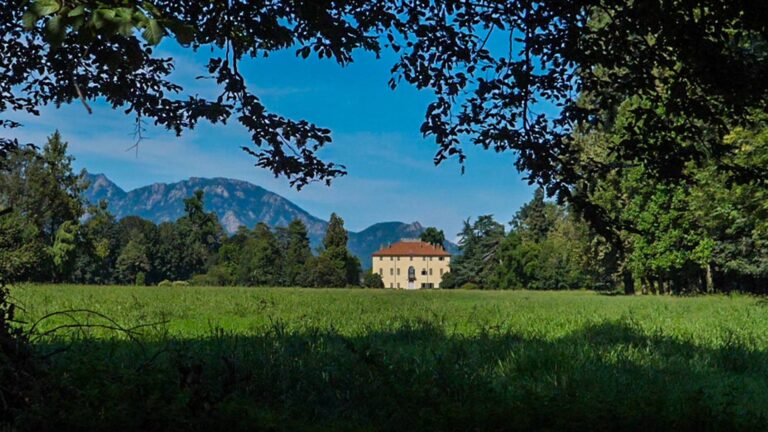
Capolavoro di Xavier Kurten, unisce natura e architettura in un perfetto giardino romantico all’inglese.
Da fortilizio medioevale a dimora neoclassica, la villa racconta secoli di storia tra architettura, arte e tradizione.
Tra edifici storici restaurati, comfort moderni e natura, offre un soggiorno nella quiete della campagna piemontese.
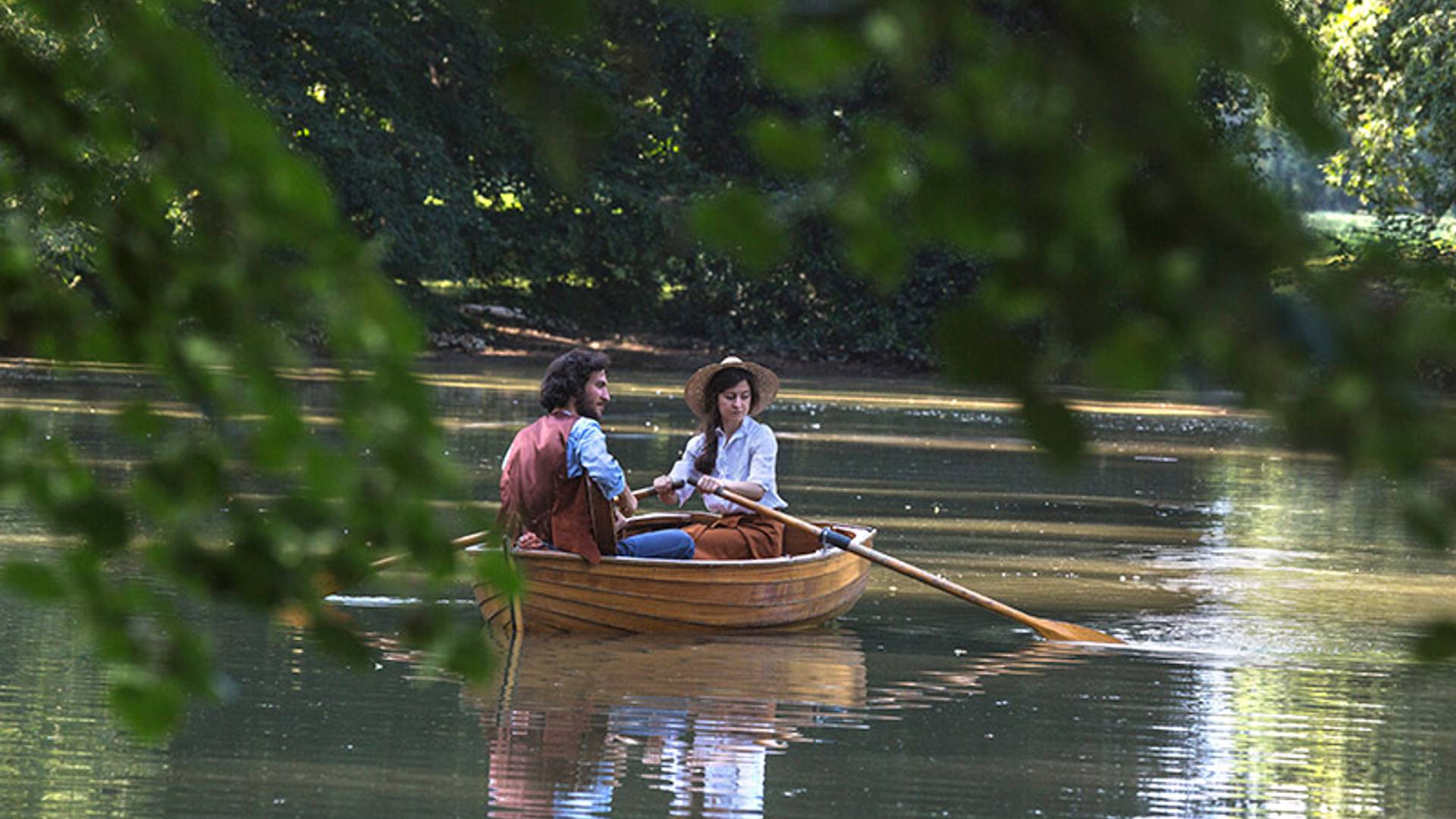
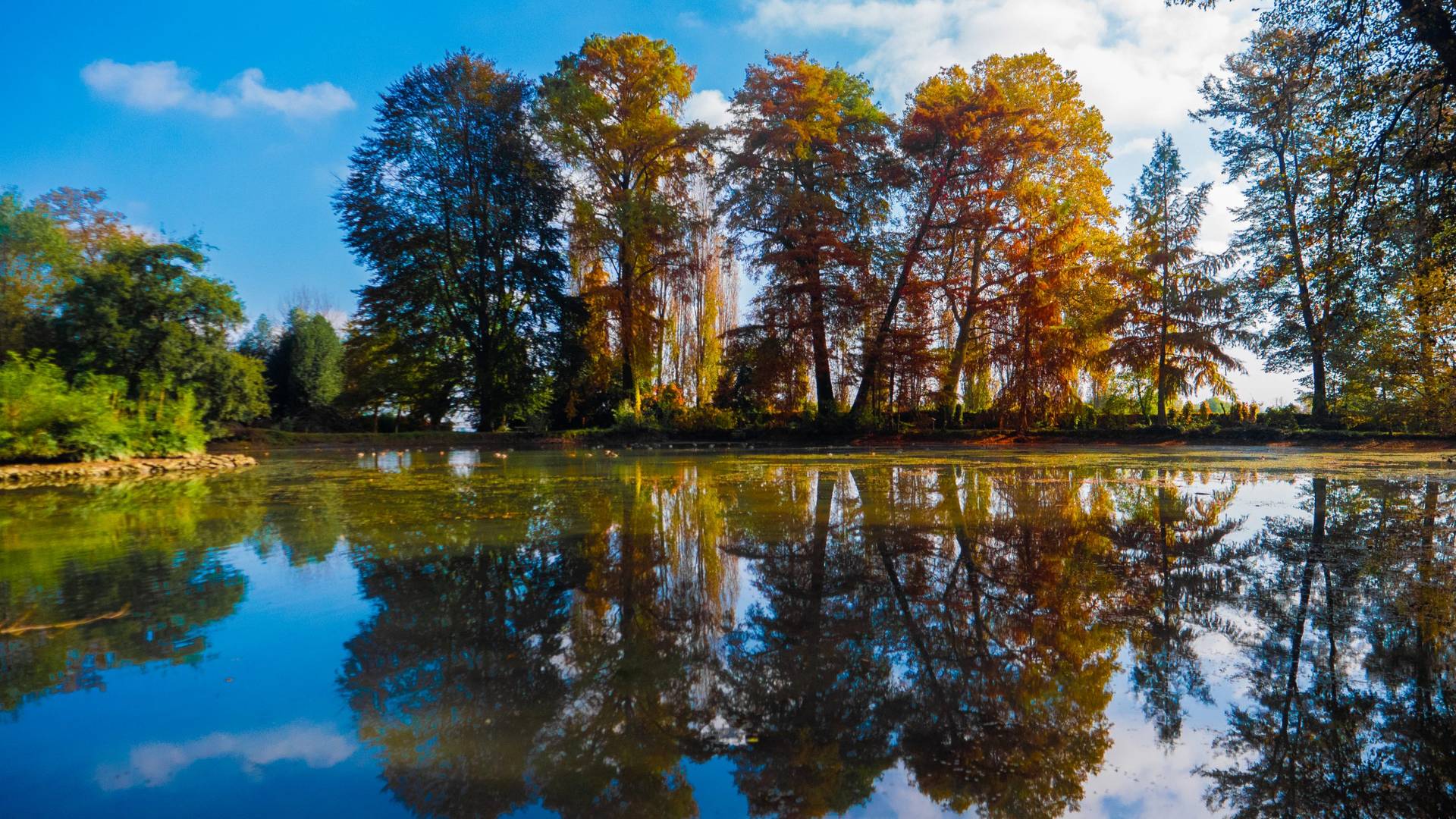
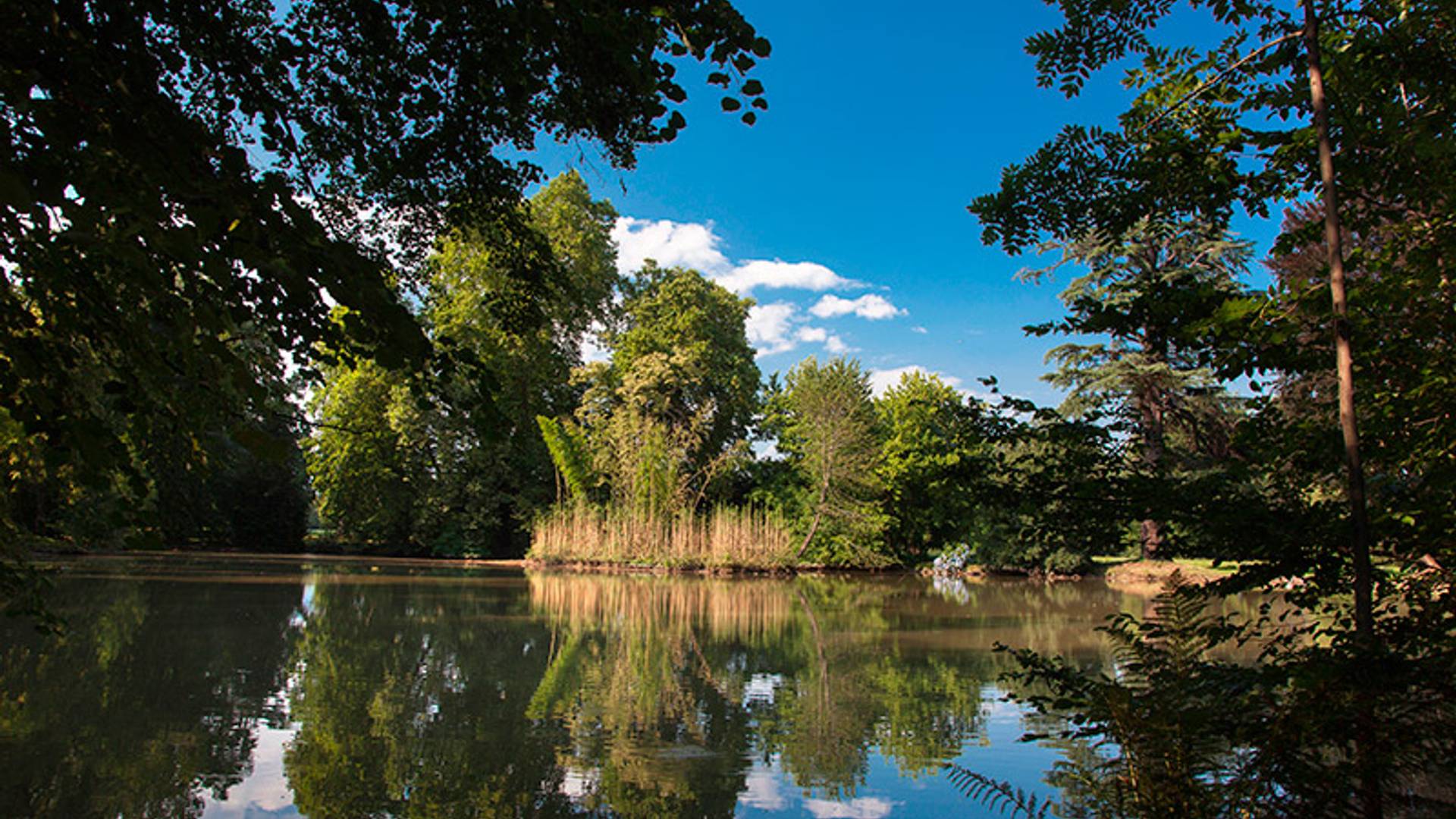
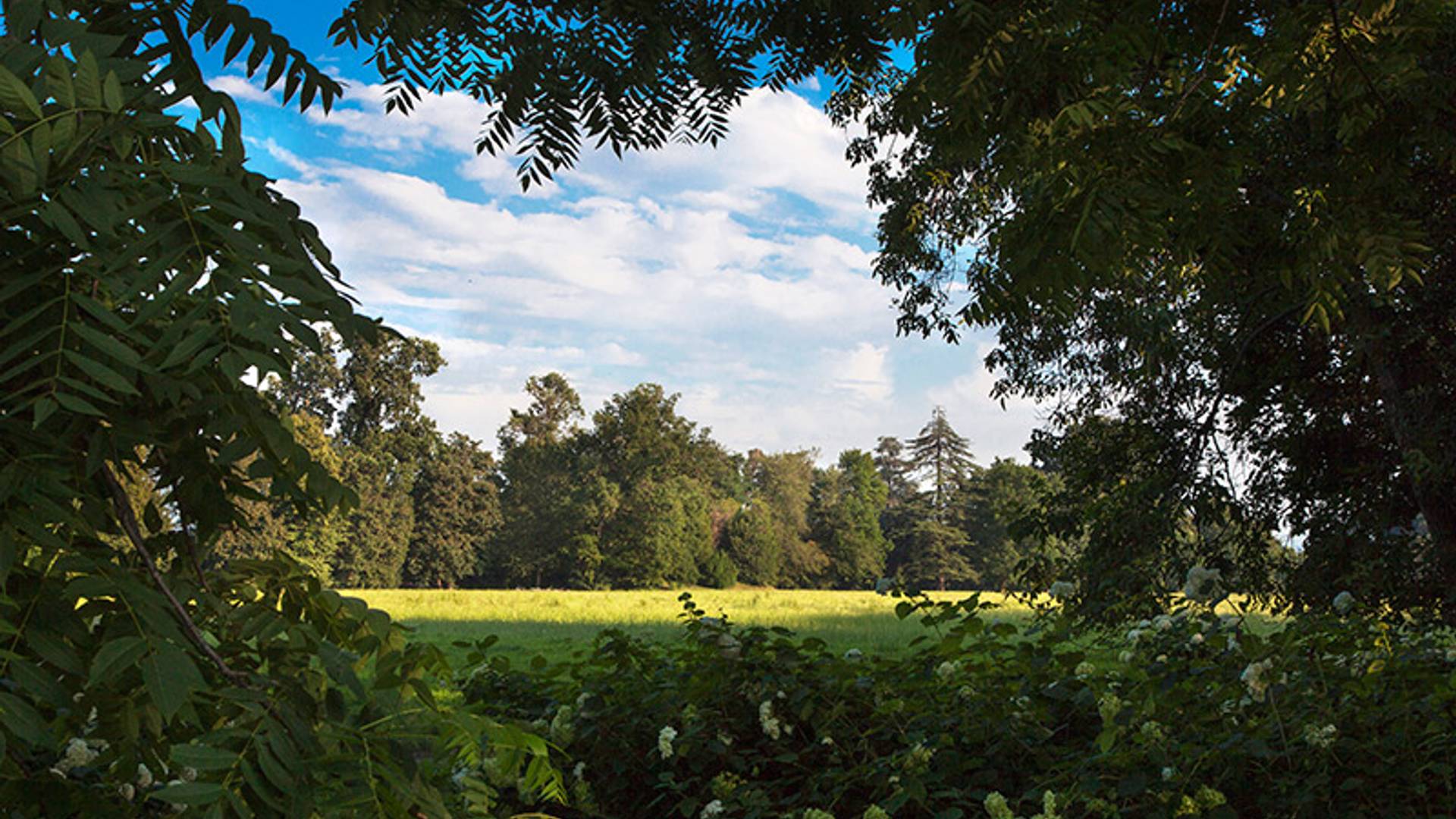
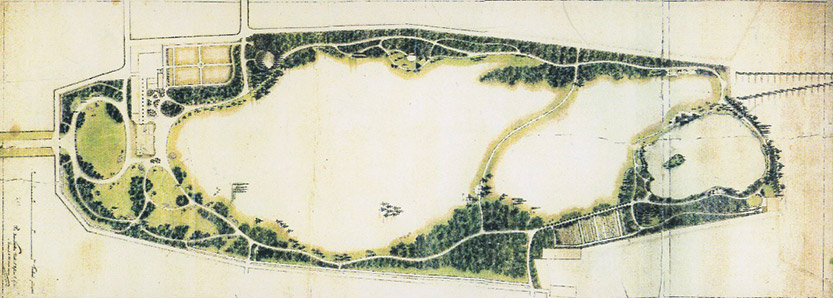
A drawing dated March 28, 1835, signed by Racconigi Kurten, besides giving us a precise idea of the park’s intended development, provides information on the residence itself, which was taking its current form in those years. The residence, in fact, forms a unitary element together with the park and gardens surrounding it. The park itself extends south of the palace up to a saut de loup [or “ha-ha”] designed at the southern edge so as not to interrupt the view of the domesticated nature with the surrounding wall, which continues to allow the view of the countryside towards the Chisone. Xavier Kurten provided several drawings for the park, including the project for the “Celtic temple” to be erected on the shores of the lake (now enlivened by a beautiful family of geese) and the gamekeeper’s house.
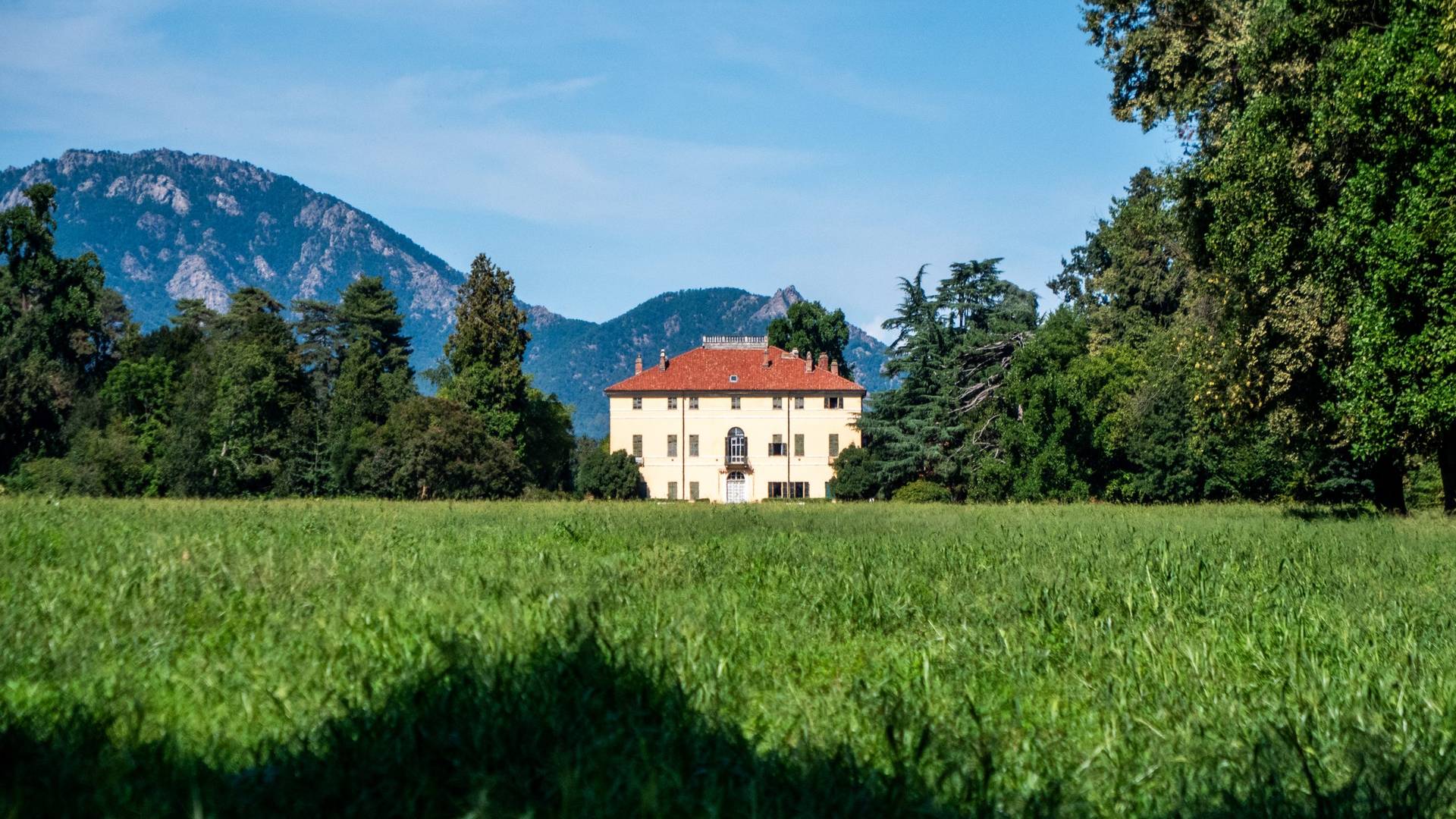
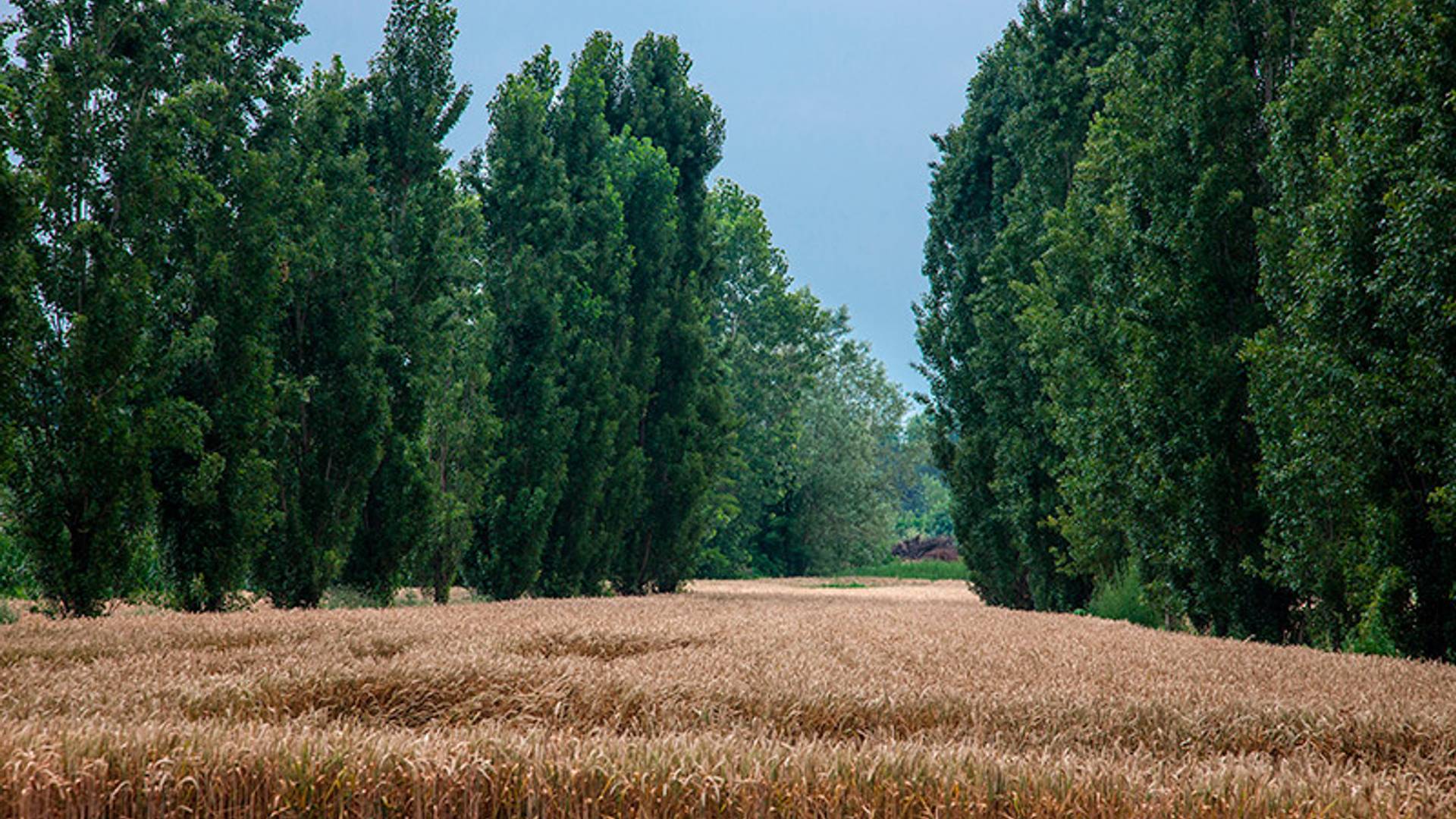
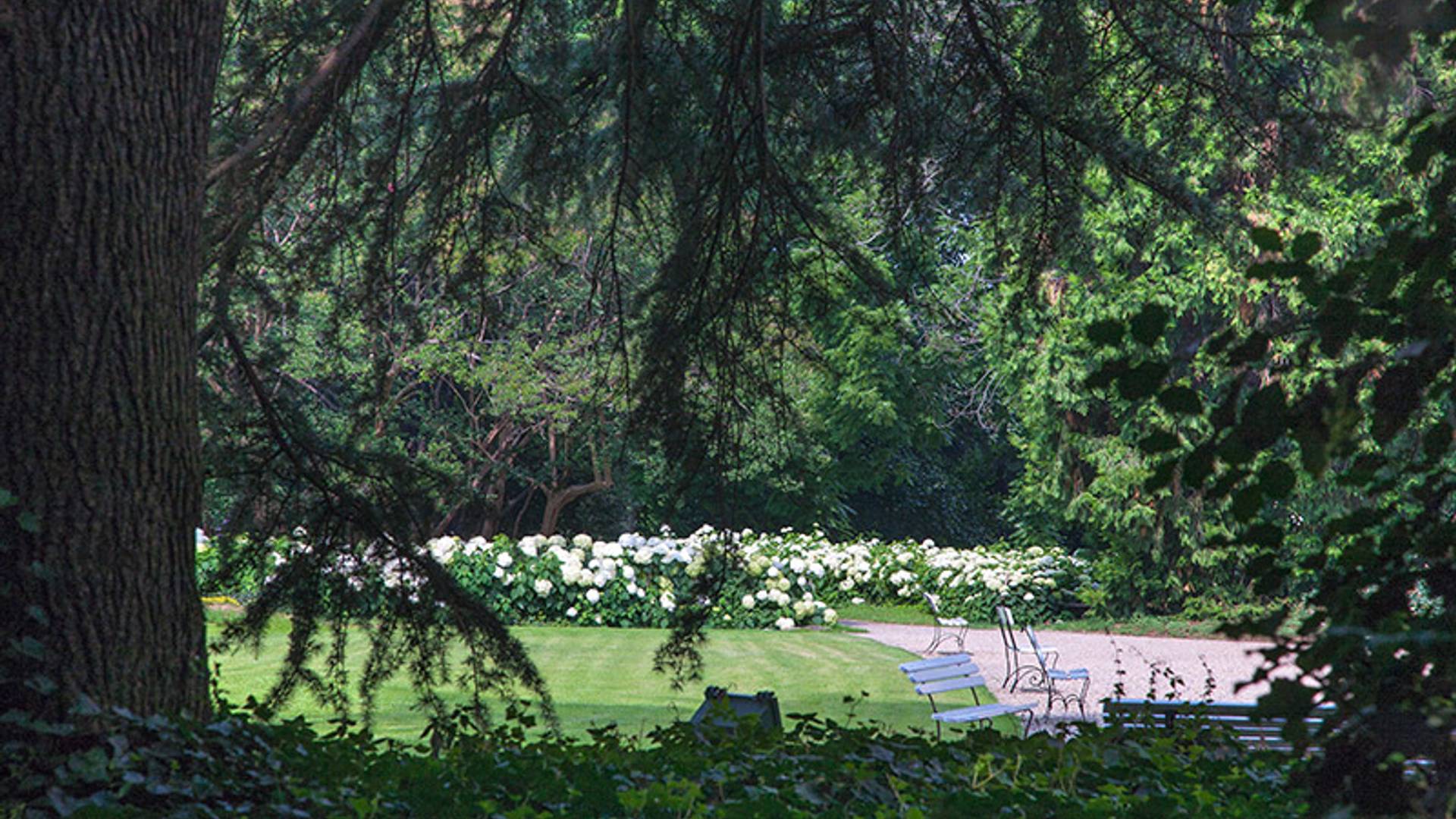
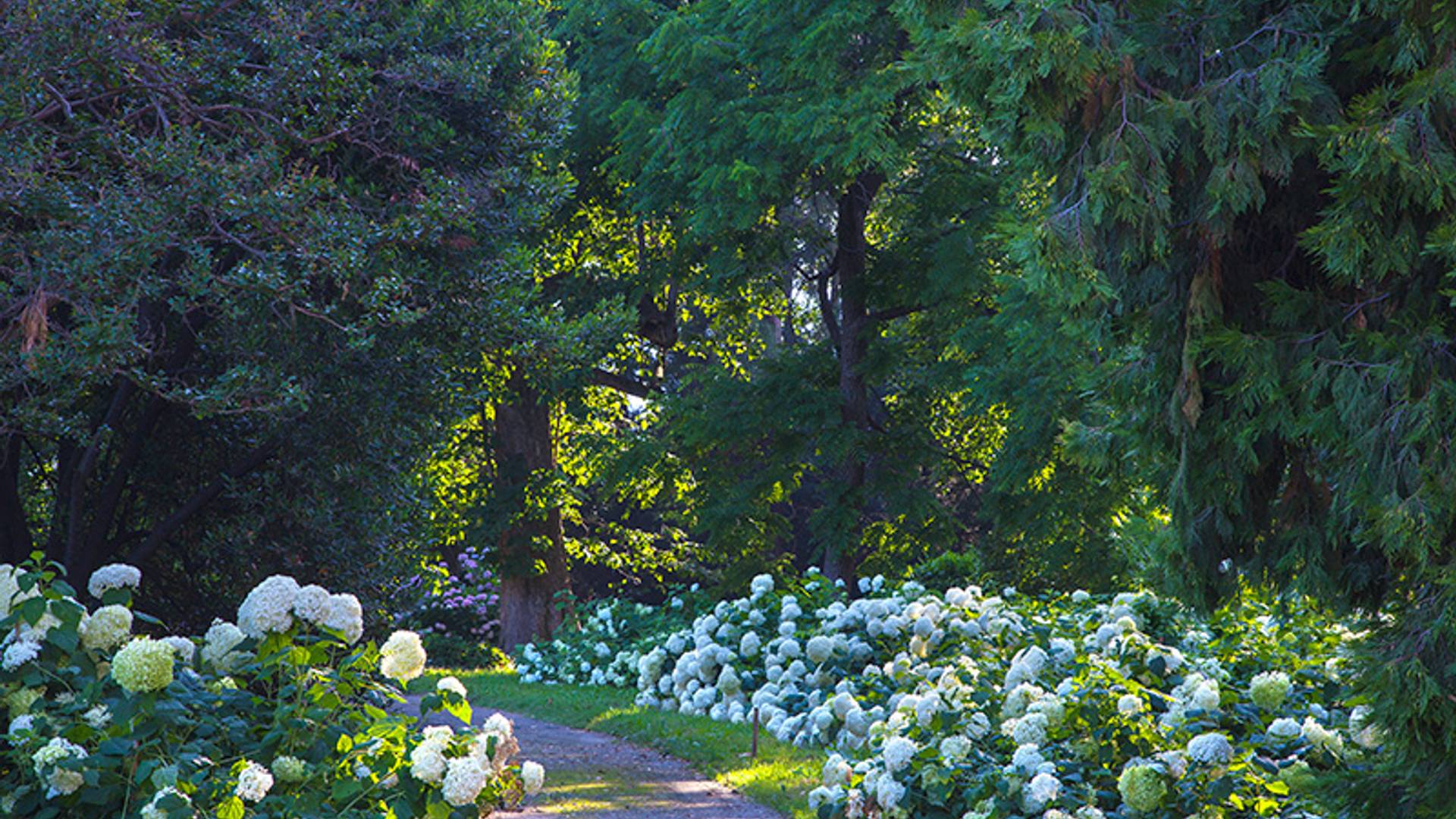
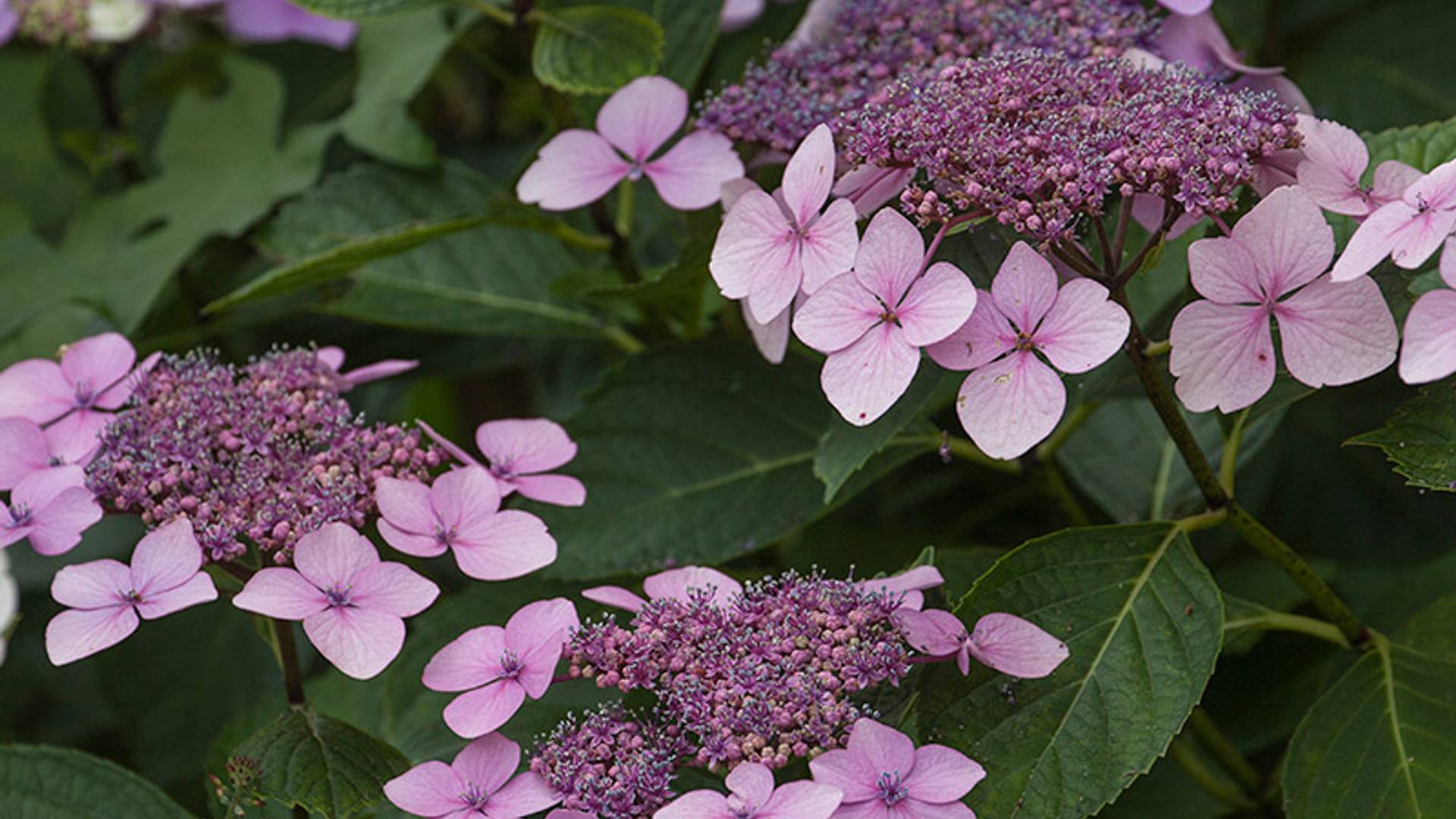
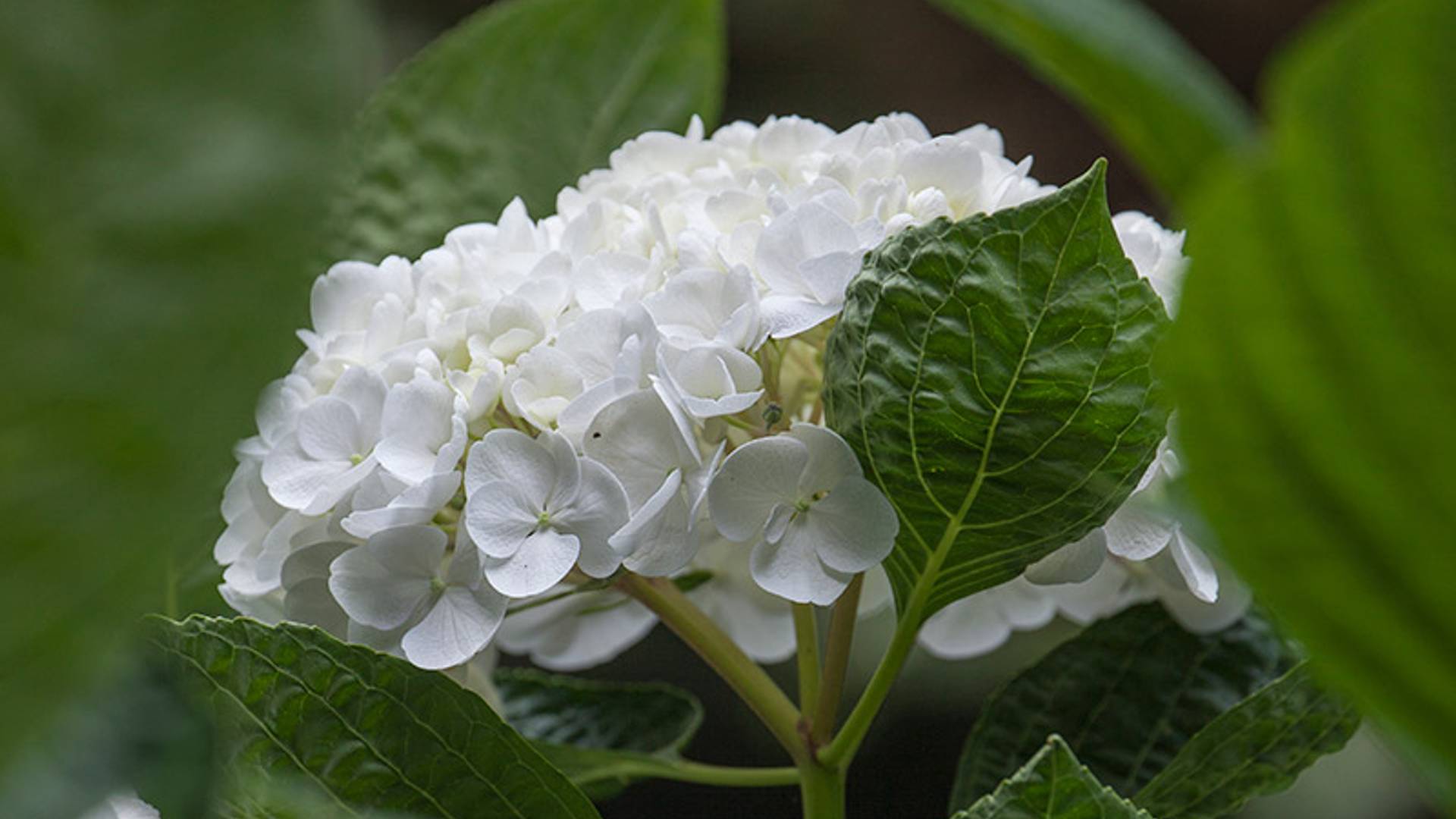
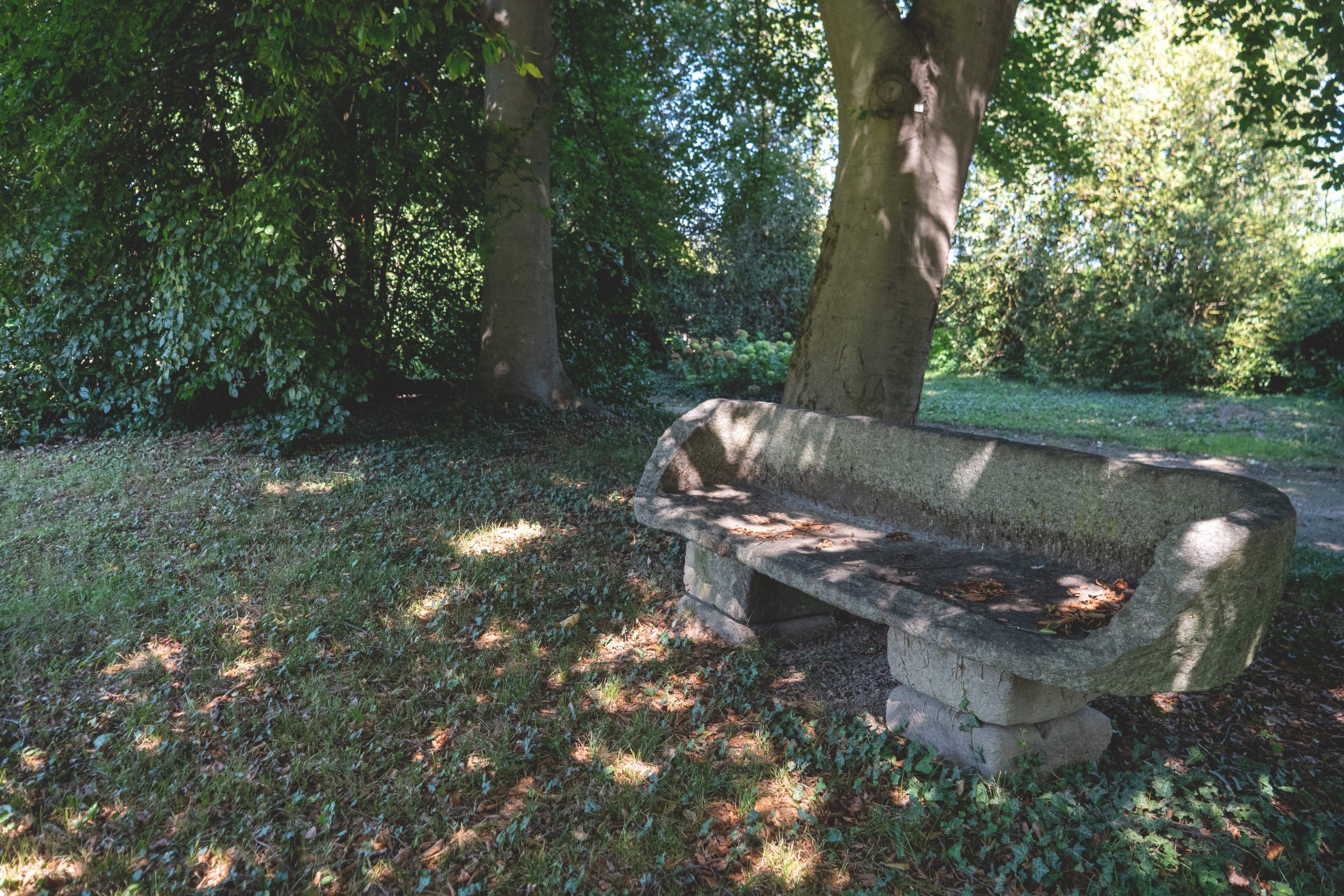
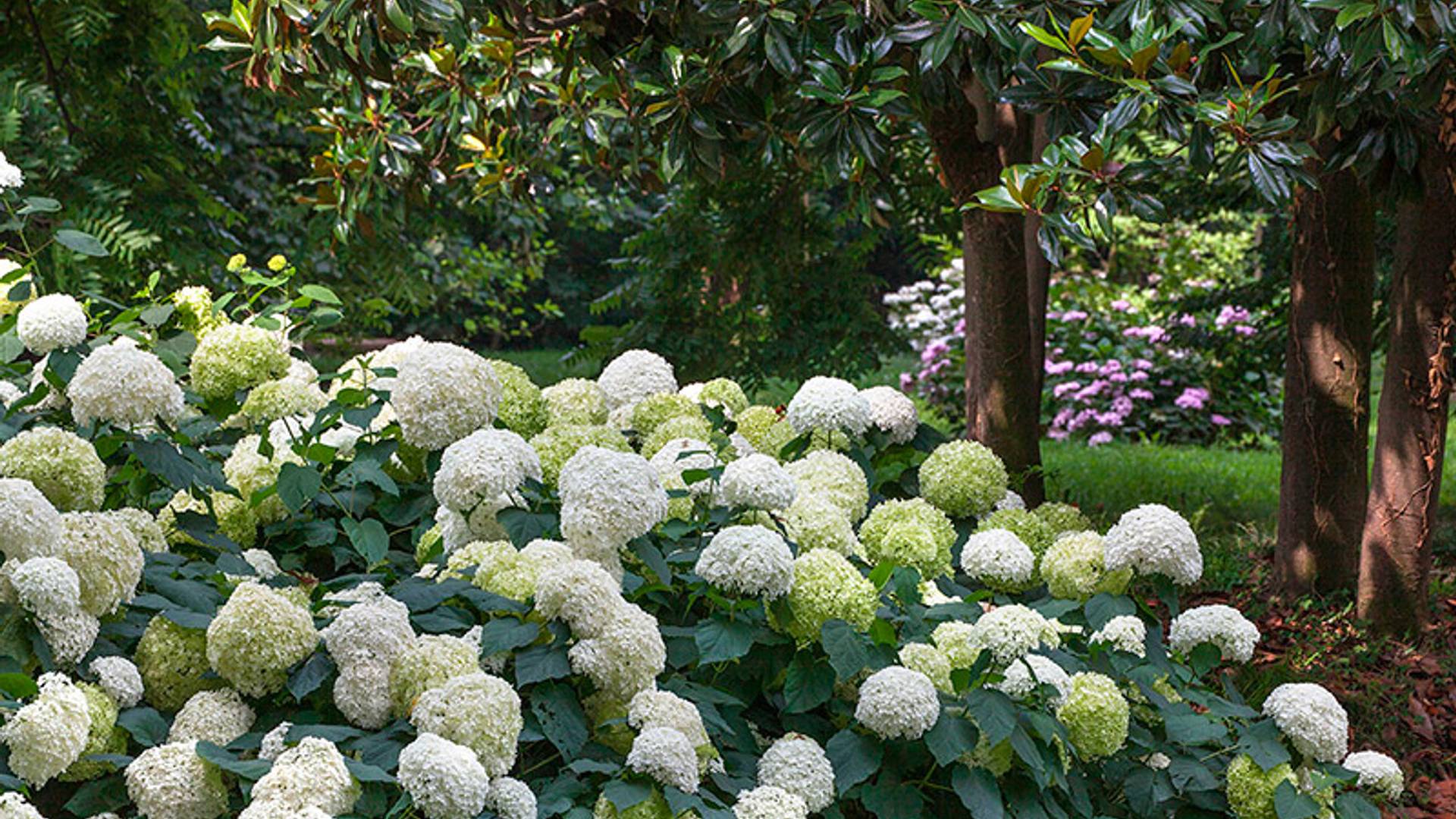
The park’s design (like most of Kurten’s projects for the Savoy court and the kingdom’s nobility) is inspired by the Romantic model of English origin, where nature is “recreated” to enhance the values of the environment, with visual cones that develop between the groves created 180 years ago, around the large lawn in front of the palace, where a beautiful flock of Texel sheep grazes. The surrounding groves, crisscrossed by paths and providing glimpses for the visitor’s gaze, are home to many ancient trees: in addition to the large oaks, there are linden trees, dwarf horse chestnuts, plane trees, Austrian pines, ash trees, thujas, ginkgo bilobas, bald cypresses, magnolias, poplars, hornbeams, tulip trees, and Lebanese cedars; as well as Diospyros virginiana (American persimmons over 20 meters tall), pines, cedars, firs, and cryptomeria; and more recent restoration plants, such as holly and bamboo and – in the words of Paolo Pejrone – the “light brushstrokes of white groups of hydrangeas” Hydrangea arborescens ‘Annabelle’ that enliven the shaded areas; while the H. ‘M.me Emile Mouillière’ decorate the spaces closest to the house. To the north of the house, the park design becomes more formal, with the large elliptical lawn aligned with the long ancient hornbeam avenue, preserved in Kurten’s design and, upon arrival, at the main entrance to the vestibule of the house, flanked – at the corner – by the family chapel that has hosted the family’s important events over the centuries.
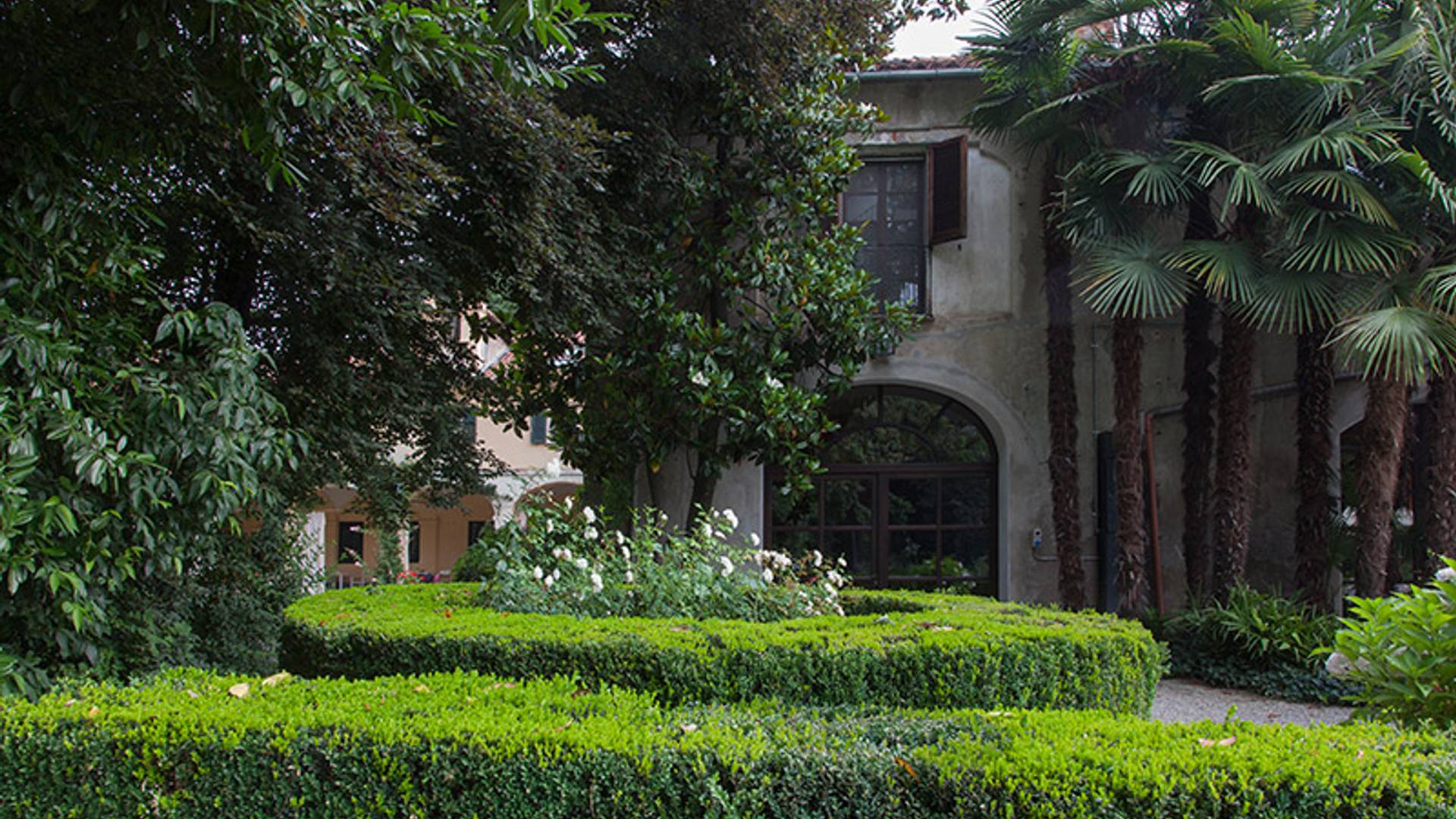
The Torrione park is a large Italian garden.
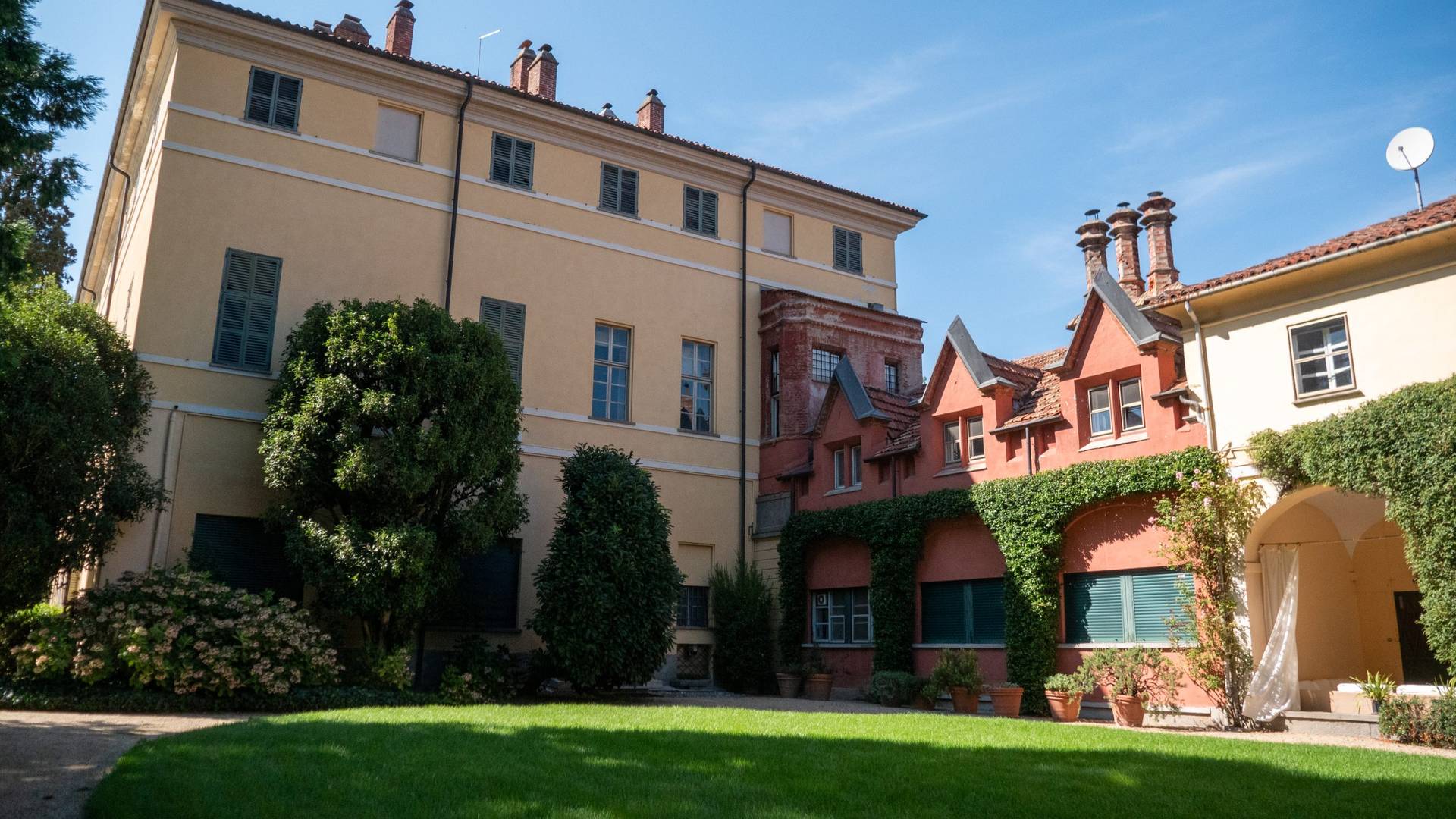
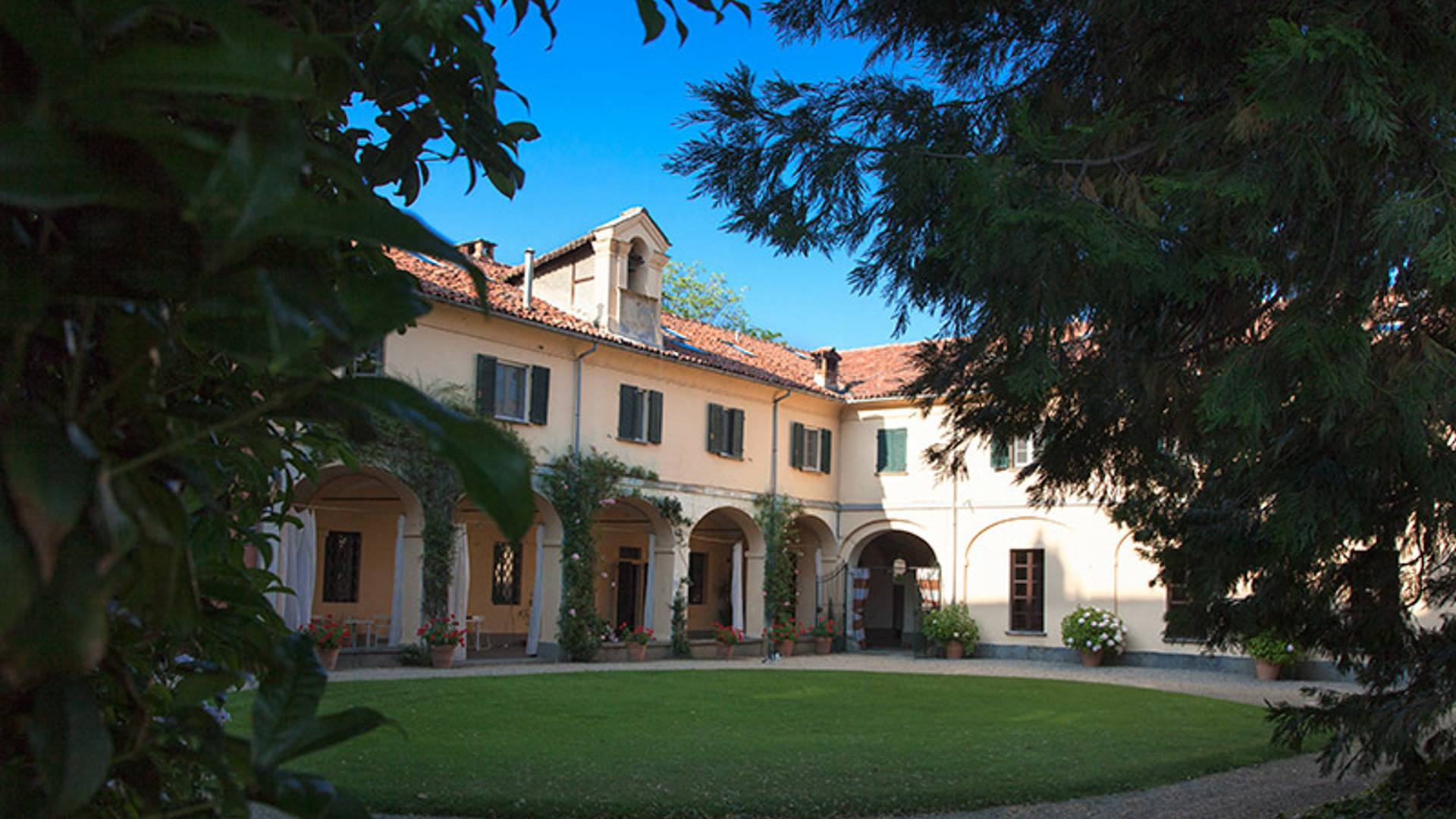
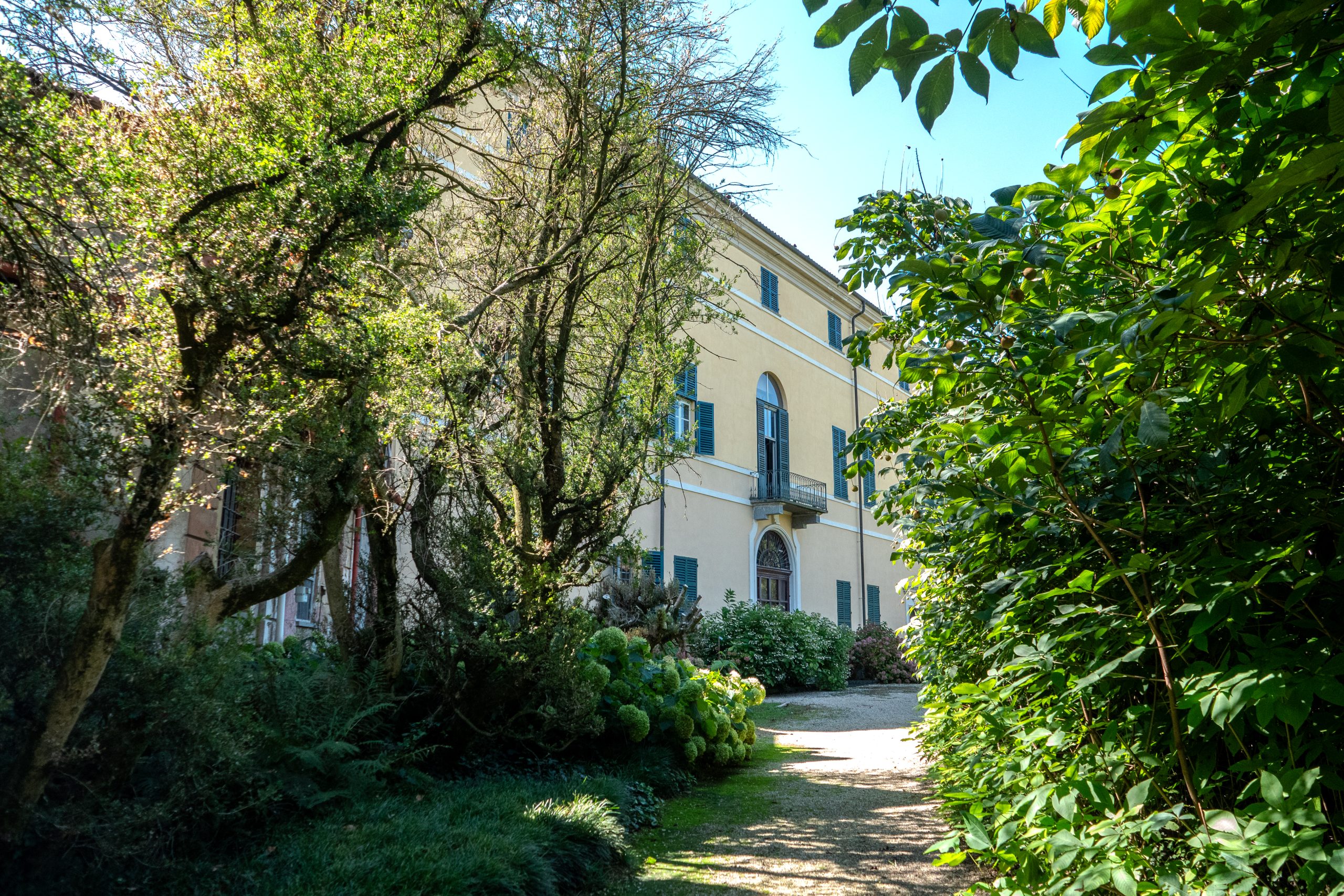
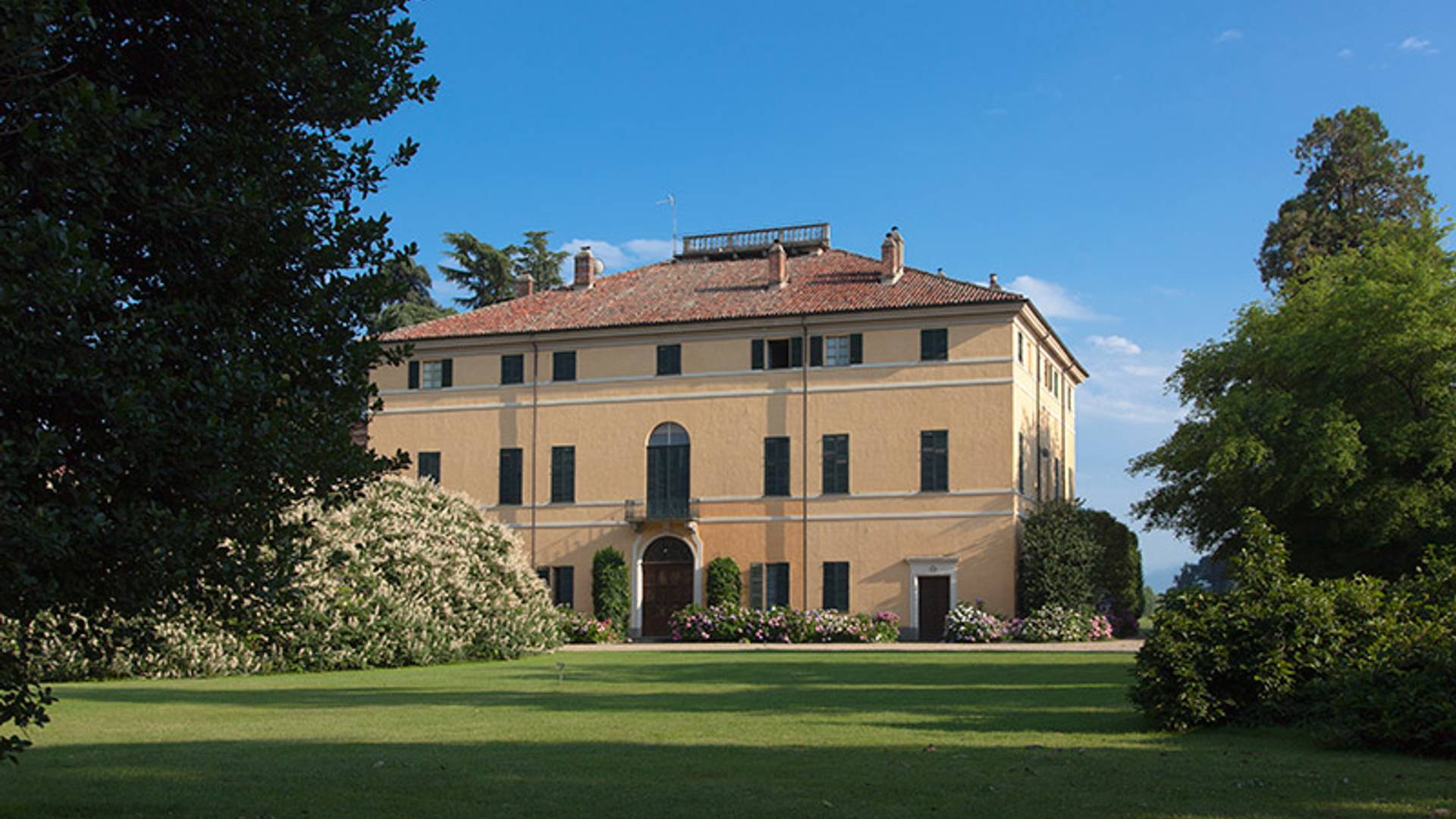
The Villa of the Marquis Doria Lamba of Pinerolo is a medieval complex that expanded over time until, in the early 19th century, it reached its current structure of high artistic value in its neoclassical style. The first visual representation of the Torrione was drawn by Bertino Rivetti around 1558: it depicts a series of buildings composing a castle structure, consisting of a keep with a crenellated tower, surrounded by a quadrilateral wall with cylindrical towers at the corners.
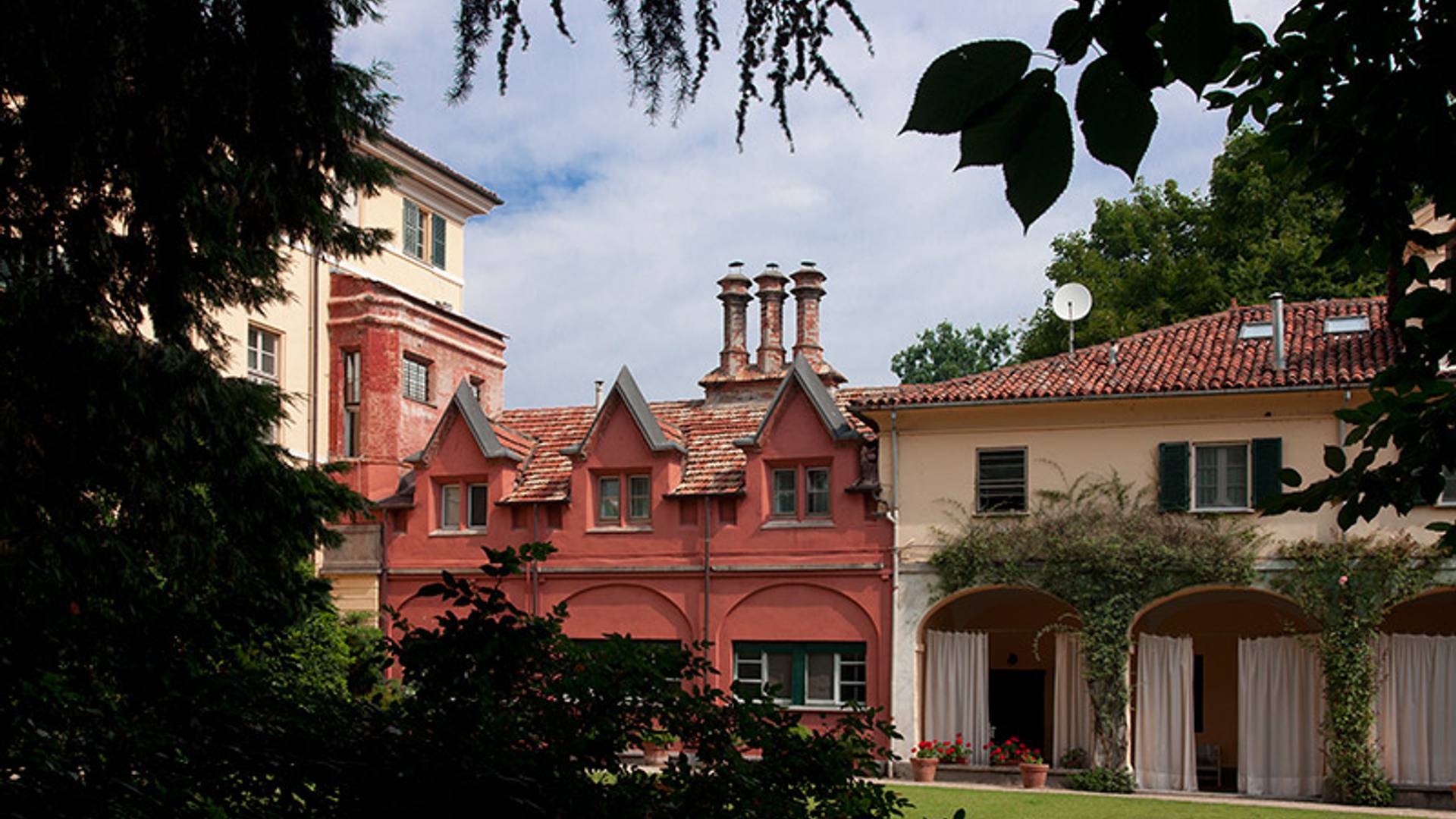
Initially owned by the noble Trucchietti family of Pinerolo, feudal lords of the San Martino Valley (now the Germanasca Valley), and then by the Canera Counts of Salasco, the fortress (of which the sloped bases of the medieval tower remain in the villa’s basement) was transformed, in the 17th century, into a country villa with large gardens. In the early 19th century, the villa was expanded with interventions by architects Ignazio Michela and Alessandro Antonelli. In 1856, the tower was purchased by Marquis Leone Doria Lamba. Its current owner is Marquis Leone Doria Lamba, a descendant of the doge’s branch of the ancient Genoese family whose most notable members included Admiral Lamba Doria, victorious in the 1298 Battle of Curzola between the Genoese and Venetians, during which, among other things, Marco Polo was taken prisoner.
The three-story villa’s main entrance opens onto a Baroque-style hall that overlooks the central avenue to the north and the park with centuries-old paths leading to the pond to the south. Beyond the lake, a wide view opens up over the surrounding countryside. On the first floor, the ballroom features an ovoid floor plan, covered by a low-arched dome with a polychrome marble mosaic floor. Its fan-shaped design, derived from classical Roman architecture, recalls the forms widely used by Pelagio Palagi in his Carlo-Albertine architecture. The adjacent halls retain 19th-century decorations, including pictorial cycles with mythological subjects. Next come the bedrooms, with stucco vaults and cornices and lightly painted decorations featuring grotesque motifs and zodiac signs.
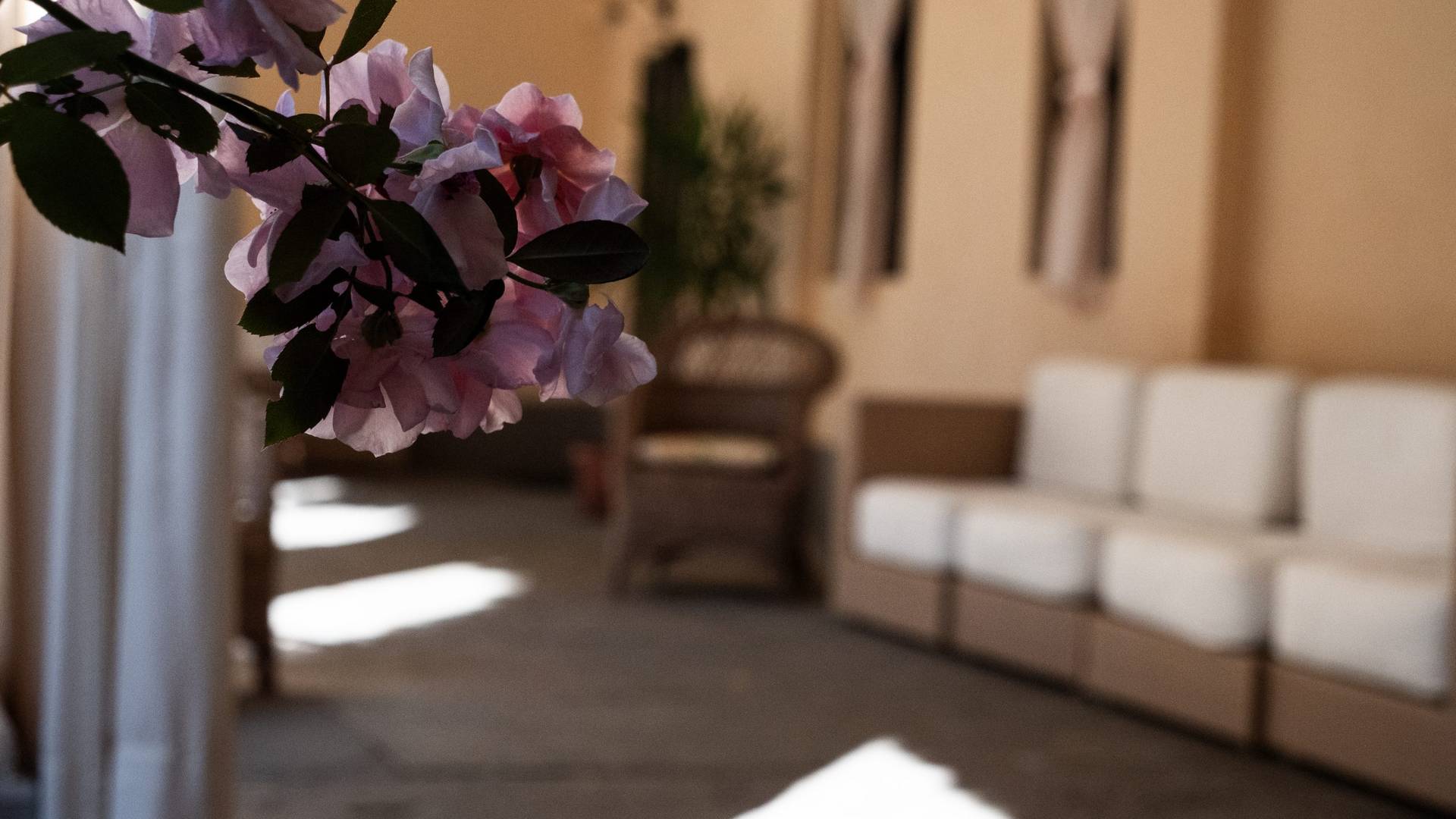
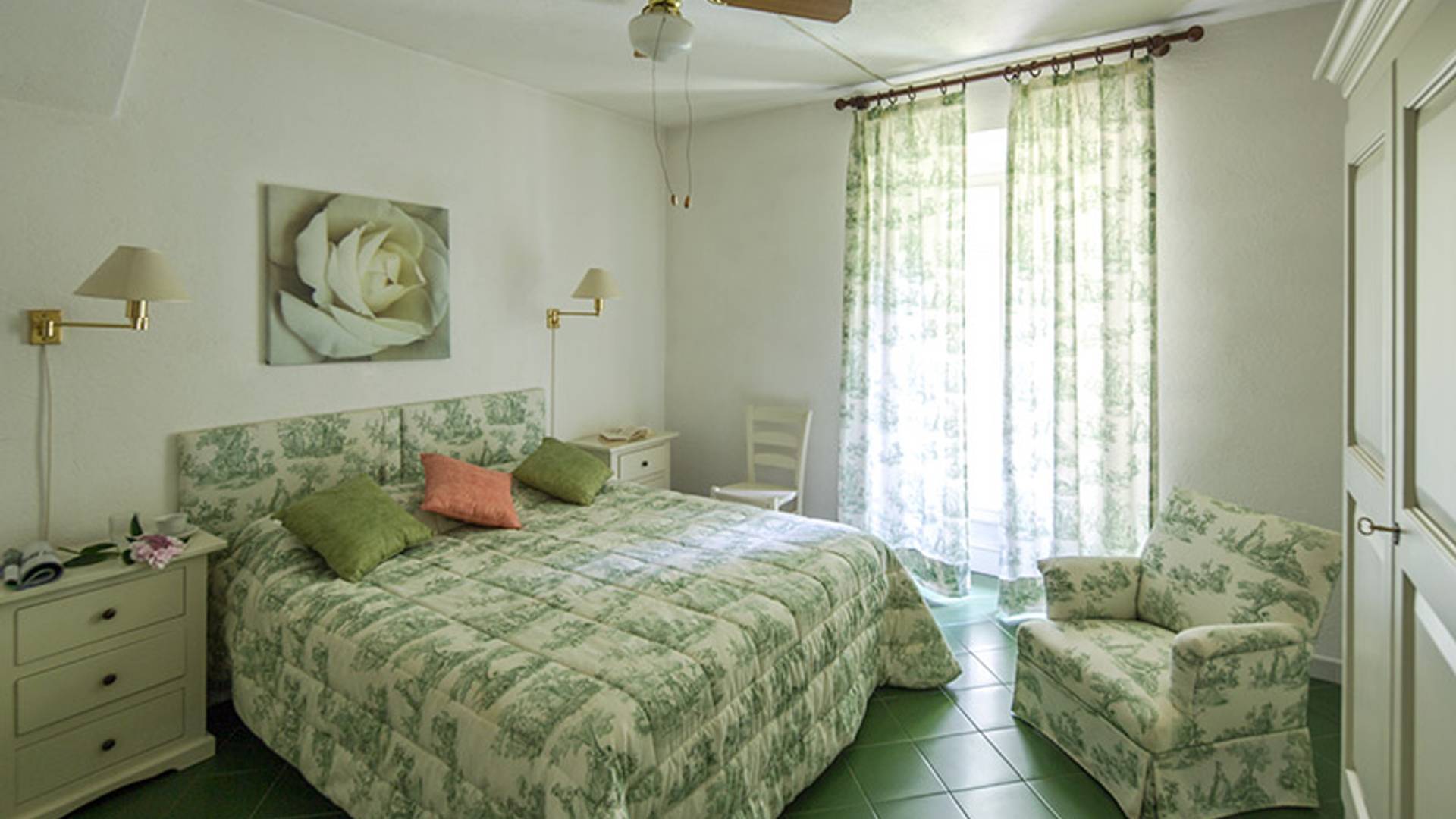
Next to the villa are several annexes, including remarkable medieval kitchens and the “Bigataia” wing. This area, once used for silkworm breeding, is now a Bed & Breakfast, after careful and meticulous restoration that has enhanced all the charm and warmth of the ancient setting. Hospitality, understood as a vacation among friends, is a long-standing tradition of the Doria family, who offer their guests a stay characterized by the tranquility of the Piedmont countryside and the opportunity to enjoy a peaceful “vie de château” filled with relaxation, sports (the tennis court and outdoor pool are available to guests), long walks on foot or by carriage, and visits to the historic sites of ancient Piedmontese residences.
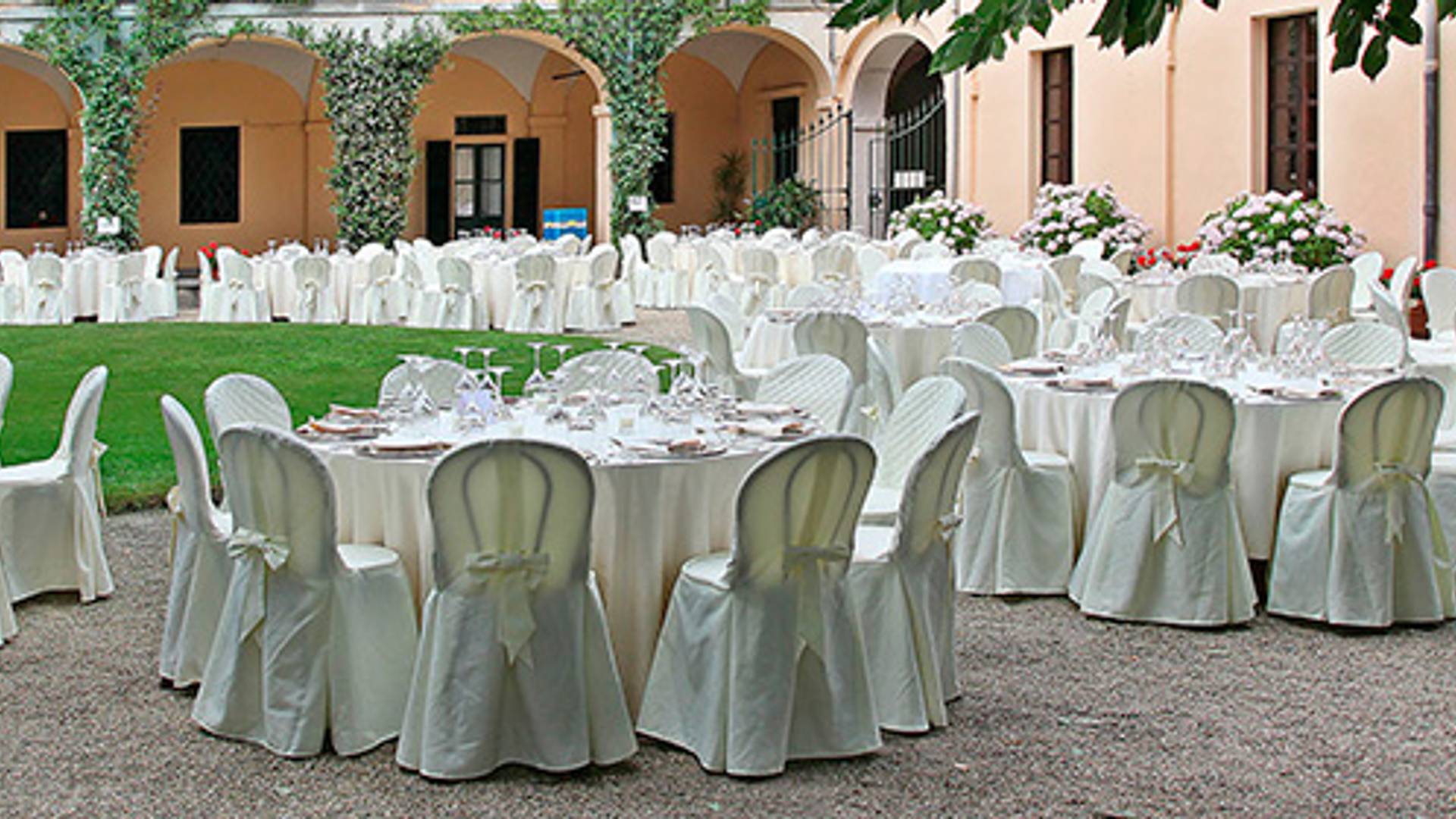
The Il Torrione complex, nestled in the extensive historic park, is the ideal setting for refined and elegant ceremonies and weddings, where the romantic atmosphere of a timeless setting enhances every tasteful detail to create a dream. But that’s not all: the silence and tranquility of the greenery, along with the relais’s diverse accommodation options, make it the ideal location for exclusive events, such as meetings and conventions.
At guests’ disposal:
The venue’s halls and grounds are available exclusively for one wedding per day.
Upon request, torches can be provided along the arrival avenue and from the parking lot to the reception area, and helicopter landing facilities are available.
Attractive discounts for all weddings taking place this week
Born in Brühl, near Cologne, toward the end of the 18th century, Xavier Kurten, a spokesman for the Romantic spirit, introduced to Piedmont the taste for the English garden, already deeply rooted throughout Europe and particularly in England. The classical French model, until then dominant and tied to scenography based on axial perspective, thus gave way to a taste for the artistic garden: no longer symmetry and axiality that obliterate nature, but a seemingly “spontaneous” combination of architecture and trees to beautify and enhance the landscape. The garden becomes a path made up of successions of carefully studied scenes created to evoke emotion.
During his years in Piedmont (1812-1840), Kurten designed numerous gardens: four owned by the Savoy family (the parks annexed to the Castles of Racconigi, Govone, Agliè and Pollenzo) and several belonging to aristocratic Piedmontese families, including Il Torrione in Pinerolo.Distinctive features of Kurten’s style are the variety and quality of the plants, carefully selected for each point of the composition; the groups of trees arranged in a circle; the large expanses of lawn glimpsed as one strolls along the paths connected by numerous transversal routes; and the irregularly contoured lake with its small island. His projects also feature dense areas of shade and paths immersed in vegetation that awaken “a sweet emotion, a peaceful and lasting satisfaction” (Ercole Silva).
His collaboration with the architect Ernesto Melano and the sculptor and architect Pelagio Palagi, active at the court of King Charles Albert, brought Piedmontese cultural circles closer to European tastes, in which Romanticism was the dominant phenomenon and attention to garden art was its direct manifestation.
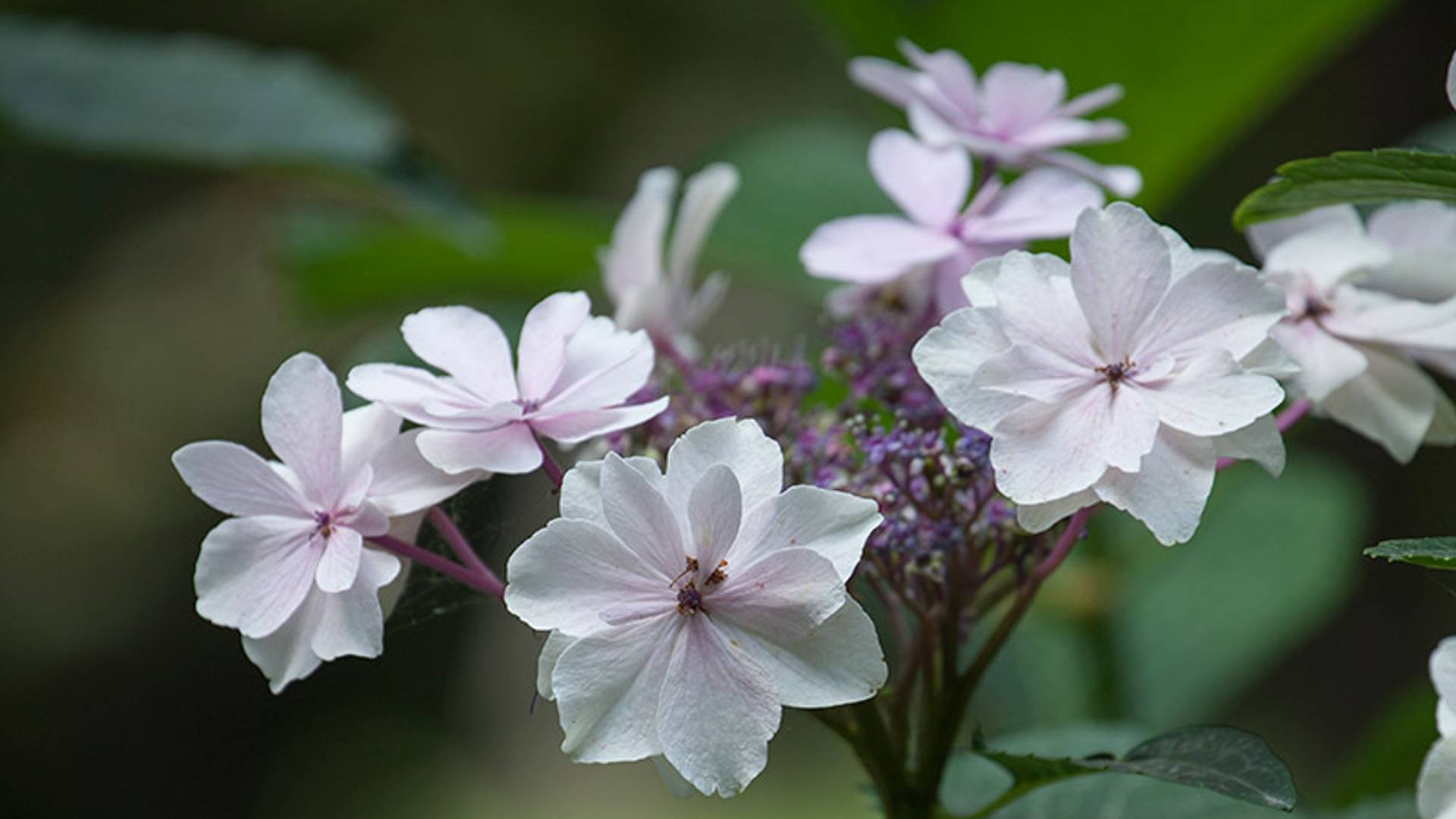
Hydrangeas, commonly called hydrangeas, grow naturally in both Asia and the Americas. In Asia, Japan is the country where most species and cultivars of H. macrophylla and H. serrata originate. Numerous species also originate from China and Tibet. H. arborescens, H. quercifolia, and H. radiata, on the other hand, are native to North America. The only hydrangea native to Mexico is H. semannii. The Torrione is included in the collections nationally recognized by the SOI.
Hydrangeas are woody shrubs whose bark peels with age. Most grow erect, with the largest reaching up to a dozen meters in height, while the smallest are less than a meter.
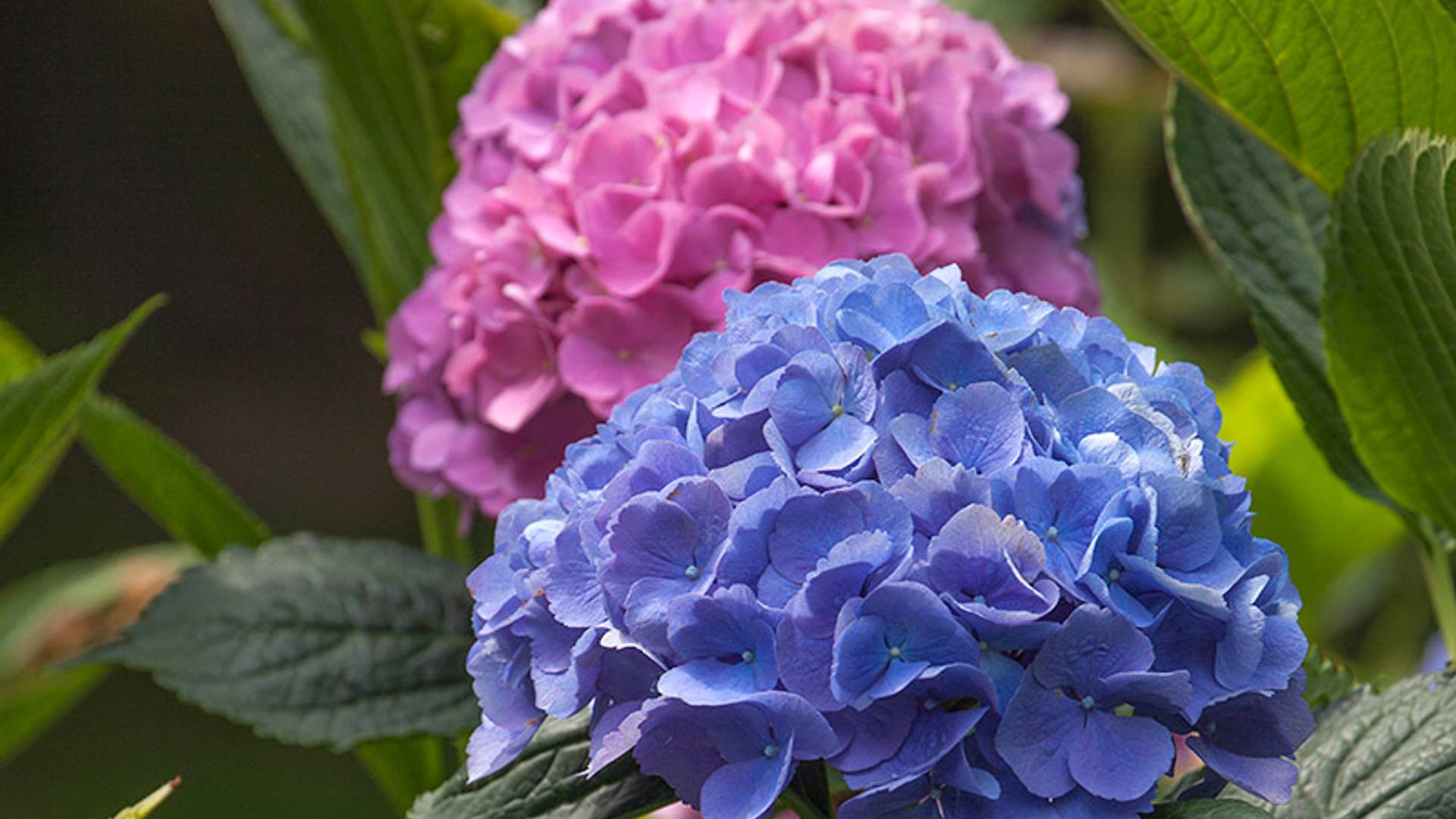
The leaves, generally deciduous (with the exception of H. semannii), are always opposite. The flowers are actually inflorescences consisting of fertile flowers in the center and sterile flowers along the outer edge. The fertile flowers are very small, the sterile flowers are larger and more showy, thanks to their more developed colored sepals. The inflorescences can be flat or globose with a panniculus. In nature, most species produce flat inflorescences, with a majority of fertile flowers. Horticultural varieties, however, more frequently have a globose shape with a majority of sterile flowers.
Hydrangea colors range from blue to red, passing through all possible shades in between, from lightest to darkest, but neither yellow nor orange exist. White is the result of the absence of pigments, and if there is a slight presence of chlorophyll, it can become ivory or greenish.The color varies depending on the soil’s acidity: in very acidic soil, the flowers will be blue; in less acidic soil, they will be a shade of violet or mauve. In reality, it’s not the soil’s acidity that causes the pigments to turn blue, but aluminum, which can only be absorbed by the roots in acidic soil. In nearly neutral soil, the colors will be pink or red.
The park is open every day from April to October with opening hours: 10.00 – 12.00 / 15.00 – 18.00
To access the park, a telephone reservation is required.
Admission: €8.00 per person – Free admission for children up to 10 years old.
Rondleidingen voor groepen van 20 peoplen of more zijn beschikbaar op aanvraag en na reservering. Toegang: €10.00.
For information on events and initiatives and to receive the newsletter, simply send an email to [email protected] or [email protected] with the subject line “Request initiative updates.”
Throughout the year, you’ll find all the information about special events and special openings on our Facebook page.
Historic Residence Il Torrione
“Maison d’Hôtes”
Via Galoppatoio 20, Pinerolo (Torino)
Informazioni e prenotazioni: Tel./Fax +39 0121 323358
[email protected] – [email protected]